Friday, February 26, 2010

Crunchy veg delight

I like making these nice, quick pie quiche-like dishes and of late I have started making them with a crumbly, crunchy cracker base. After experimenting with a few different types of crackers I've found simple saltine crackers to be the best. I bash them up in a small ziploc with a pestle and then mix the crumbs with a bit of olive oil and pack them tightly into the base of the baking dishes and then fill up the cracker shell with a delicious filling. The recipe below is a nice enough one:

1 medium tomato chopped

1 onion chopped

half a packet firm tofu crumbled

half cup chopped washed spinach

a generous pinch cumin powder

about 2 tablespoons grated cheddar

salt to taste

1 tablespoon flour

1 egg

Saute the tomato and onion in a little olive oil, till soft and mushy, add spinach and tofu and saute couple of minutes. Add cumin, cheese and salt stir well and remove from heat. In a large bowl combine flour and egg and bit of water, mix into a smooth paste and add cooled vegetable mixture. Mix very well and spoon over cracker base. Bake about 25 mins at 180.

Variation: Add other veg to this combination, swiss brown or portobello mushrooms, boiled potato, boiled corn. Eat warm or cold. Delicious!

Saturday, January 30, 2010

Eat healthy

Ever since my father-in-law (a lifelong vegetarian who has followed a strict excess-free life) was diagnosed with colon cancer we are trying to eat healthier, to fight the carcinogens that have invaded our ecosystems, to make dietary changes that may help us all in the long run.

Certain foods and spices are known to have a positive effect in preventing and retarding growth of cancerous tumors. Broccoli, brussel sprouts, blueberries, tumeric just to name a few really do help. I have been reading up on this and it seems that betacarotene (or the orange/ yellow colored) foods are really good. Try pumpkin, papaya, carrots. Then avocado is another good food; good spices include cumin and ginger.

I am working on creating recipes that are anti-carcinogen + delicious. I came up with a pretty good 'barbati dhal'. Barbati beans are the black eyed peas lentil, I made this dhal with a shrimp stock, many veggies and spices and pomegranate seeds (another good food).

Try the recipe:

Ingredients:
barbati dhal (1/2 cup soaked overnight, then drained and pressure cooked with 3 garlic cloves, 1 chopped onion, handful or a little more of pomegranate seeds and 1 tomato till soft)
2-3 cups prawn or shrimp stock (make this by simmering shrimp, heads and tails with garlic, celery, carrot and onion bay leaf about 30 mins)
1 tsp haldi powder
1 tsp cumin powder
2 tomatoes
little oil
salt to taste

-----


Blend pressure cooked dhal with celery, carrot, onion from simmered stock + a few more garlic cloves.
In a heavy pan, add some oil, then add spice powder and tomatoes and fry very well till oil separates from spice and tomato mixture.

Add the blended dhal to spice tomato mixture + the stock. Add salt to taste. Simmer for at least half an hour before serving hot with plain steamed white rice.

Friday, November 13, 2009

Catfish stew with some interesting spices

Another of my experimental dishes that turned out very well. I had two skinned catfish steaks and I used them to make this delicious slightly tangy gravy that goes well with steamed Thai hom mali rice.

Ingredients:

a small chunk of ginger peeled and scored (you can remove this after the dish is cooked)
tomatoes (I used two medium)
1/2 teaspoon kalo jeera seeds (kalonji)
1 bay leaf
1 teaspoon tumeric powder
1 cup mushrooms (Swiss browns)/ snow peas/ potatoes (diced)
catfish cut into thick slices
unsweetened yogurt 1 tablespoon

Heat some olive oil; fry ginger; add kalonji, tumeric, salt and bay leaf. Mix well and add tomatoes, stir fry a couple of minutes and add vegetables and stir fry again a couple of minutes. Add the yogurt and stir very well. Add the fish and about 1 and a half cup warm water. Simmer on low heat about 15 minutes or till the vegetables are cooked.
Serve hot.

Saturday, November 07, 2009

Picnic time!

It's beautiful weather time in Hong Kong right now and we are celebrating the glorious clear skies (a BIG thing in HK!) with weekend family picnics, of course it helps that we are on Lantau Island -- as unspoiled a paradise as you will ever get anywhere in the world.

The best part of our picnics -- other than watching my 2-year-old collect mud-covered stones -- is the food. I like packing light tasty and filling picnic-y things for us to eat. Like last week we had a small Gladware box full of soft white fluffy mini idlis, a quickly made coconut chutney to go with that and fried rice. For tomorrow's picnic I am planning on making pizzas and a small amount of udon. With homemade jam tarts for desert.

The good thing about homemade pizzas is that you can have fun with the toppings. I am planning on making one seafood and one 'veggie-yummy.' Look out for the pizza recipes next week!

I like making my udon with a thick peanut butter sauce. Here is the recipe:

Udon with peanut butter sauce (try using the organic peanut butter for a healthier less sodium filled taste)

Let udon rest in boiling water for about 5 minutes.

Cut up veggies you want to use in the noodles (tomatoes, mushroom, carrot, snow peas, green pepper, cabbage, spring onion etc in any combination)

In a little olive oil, lightly brown a garlic clove; add a beaten egg and stir quickly; add veggies and stir fry. After a few minutes add 1 teaspoon (or a little more than that according to taste) peanut butter and stir quickly, add soy sauce and a pinch of salt and then finally add the noodles and mix well. Remove from heat.

Friday, October 23, 2009

Something nice, by mistake!

Now that I am officially a 'committed playdate mom' thinking up finger food and easy snacks for the 4pm-6pm playdate slot is an important occupation. I've got a few favorites: rocky road fudge (my version omits the marshmallows and nuts); vegetable slice (frittata by another name); fruit salad (anything goes into this as long as it is fruit!); sandwiches.


I made an especially yummy frittata the other day and it was largely by mistake as I was basically trying to give my day-old potato waffle batter a new lease of life.

The recipe:

one red onion (medium sized) chopped small
tomatoes diced (2 work fine)
a handful of brown mushrooms chopped
a carrot peeled and diced

about a cup of potato waffle batter (mine had potato/ flour/ a bit of oil/ eggs/ milk and seasoning mixed in)
a cup grated cheddar
a pinch of salt and fresh ground pepper

Lightly saute onions/ tomatoes/ mushrooms and carrot till soft. Remove from heat and mix in the waffle batter and cheese. Pour into a greased pie dish, season well and bake about 25 minutes in a moderate over till set.
Cut into slices and serve warm or at room temperature

Saturday, October 10, 2009

Easy prawns and broccolli

This is an easy quick delicious prawn curry. Use deveined frozen prawns if possible.

Ingredients:

broccoli
1 packet frozen deveined tiger prawns (thawed)
a couple of french beans chopped into pieces
a cup of peas
2 potatoes in skins
1/2 cup thick coconut milk
tomatoes
dhania-jeera powder 1 tsp
haldi powder 1 tsp
salt to taste
mustard seeds 1 tsp

Method:

Mix prawns with tumeric and a little salt and keep aside for a few minutes while you cut the broccoli into small florets; cube potatoes and cut tomatoes into quarters.

Splutter mustard seeds in oil and then fry prawns in the same oil till they turn a nice reddish color. Add the brocolli, beans, peas, potatoes and tomatoes. Fry well. Add tumeric, dhania-jeera, salt and fry well. Add about a cup of water and simmer on low heat till vegetables are cooked through.

Add coconut milk, check salt and simmer another few minutes. Serve hot with white rice.

Saturday, April 04, 2009

Food notes

Dosa is a staple breafast food in India's four southern states. My mother-in-law makes a crispy light dosa with a batter that is not over-fermented so it is nicely tangy without being too sour. My dosa batter is tangy too, but while my husband eats his Saturday morning dosas with 'gunpowder' (a fiery mix of coarsely blended dry red chillies, Bengal gram dhal, whole pepper corns, salt and 'hing') yogurt and unsalted butter; I make more adventurous dosas for myself (my toddler daughter loves these!)

A favorite is adding a spoonful of batter on the very hot 'tawa' and then breaking an egg into the bubbling batter and adding a pinch of salt. Cover with a tight fitting lid and cook for a couple of minutes on a low flame (the lid traps the steam helping to firm the egg yolk) then add a little more oil and flip over and cook on the other side. The end result is a crisp fried egg buried into a fluffy dosa. Yummy!

Saturday, March 28, 2009

A one-pot rice dish

Rice is a staple food for us. I usually cook basmati rice at home, at times I use the short grained Calrose (Australian) rice to make dishes like risotto and mixed rice. This recipe is another of my 'improvised' quick meals that actually works quite well as a complete one-pot dish.

The Recipe

Soak half a cup of black eyed beans overnight. The next morning pressure cook the beans with some cloves of garlic.

Other Ingredients

one tomato
vegetable or chicken stock (2-3 cups)
1 cup basmati rice
half cup chopped greens like kale, baby spinach, green spring onion bottoms
salt to taste
3/4 cup grated cheddar cheese


Put the rice, tomato and pressure cooked beans in a thick bottomed pan. Add the stock and bring to a boil and then simmer for about 25 minutes or till rice is done (add more stock as needed). Add the greens and cook another 6 minutes or so; add the cheese and salt as needed. Serve hot.

Saturday, March 21, 2009

Favorite rice noodles

Rice noodles are delicious and can be prepared very quickly with any number of variations. I buy the house brand rice noodles from the local supermarket though the recipe that follows will adapt easily to any kind of rice noodles.


The Recipe

rice noodles
thinly sliced snow peas/ oyster mushrooms/ green cabbage/ spring onion bottoms/ carrots (all the vegetables together should be about a cup for 3 squares of noodles
1 egg beaten
2 cloves of garlic
oil for frying
salt to taste
soy chilli sauce (or any good soy sauce)


Cook noodles according to instructions, drain and keep aside

Heat the oil, saute garlic, then add egg and stir around quickly; add vegetables and stir-fry briskly for a few minutes. Finally add the noodles and seasoning and toss well. Serve hot.

Add and subtract vegetables according to taste; add shredded cooked chicken or pork if you want a non-vegetarian version; add tofu or shrimp if you prefer. Like I said the variations are endless.

Friday, March 20, 2009

A nice dhal

Cooking elaborate Indian meals with a toddler and no help can be very challenging. But because I enjoy the taste of traditional Bangla ranna and my husband enjoys his traditional Tamilian food, I often end up making meals I like to describe as 'adapated Indian'.

An example of one such dish was the black eyed peas (barbati beans) dhal I made the other day. The final dish tasted delicious and my daughter loved it though it isn't proper Indian it has all the elements of basic traditional cooking. And the best thing about the dish is that it took just a couple of minutes of actual preparation.

The Recipe:

soak a cup of black eyed peas dhal overnight
pressure cook this with a couple cloves of garlic and a small red onion the next morning

other ingredients:
paneer cubes
haldi powder
dhania-jeera powder
tomatoes (1 big or 2 medium)
salt to taste
curry leaves

Add salt, the masala powders, tomatoes to the pressure cooked dhal. Let it boil, then simmer for a while (till tomatoes are cooked through); finally add the paneer and curry leaves and cook for about 10-12 minutes more.

serve with hot steamed white rice

variations: you can vary this recipe in a number of ways: add potatoes during the pressure cooking stage; add spinach with the paneer or omit the paneer and add only the spinach; add a fresh green chilli while simmering the dhal; add a jeera/ kashmiri chilli tarka at the end

Friday, January 30, 2009

Make a quick risotto:

Calrose Australian rice (or regular risotto rice) 1 cup
Stock -- 1 and a half cups
garlic -- two cloves
spinach -- 2 cups washed and chopped
cheddar cheese grated - 1 cup
small knob of butter
salt to taste


Melt butter, add garlic.
Add rice and spinach, stir well. Pour in stock. Stir well and let rice cook (you may need to add more stock, you can also add a half glass of white wine here) ; add salt to taste. When rice is well cooked add cheese, stir in well. Serve hot and creamy.

Friday, July 07, 2006

Cabbage with sun-dried tomatoes and fresh coconut

I've modified this typical south Indian vegetable preparation with the addition of sun-dried tomatoes. I like using the dried tomatoes because it adds a richer flavor to the dish and these tomatoes are readily available from the supermarket any time of the year.


The Recipe


1 medium sized cabbage, washed and sliced finely
a handful of sun-dried tomatoes soaked in warm water for a while and then chopped into thickish pieces
2-3 red or green fresh chillies (slit)
2-3 tablespoons of freshly grated coconut
1 teaspoon cumin seeds
1 teaspoon black mustard seeds
a pinch aesofetida (hing)
1 or 2 potatoes cubed (optional)
salt to taste
oil for frying


If using the potato, cube it and deep-fry the pieces till golden and keep aside.

In a hot wok, add some oil. Then add the cumin and mustard seeds and chillies. When this begins to splutter, add the cabbage and stir-fry gently for 2-3 minutes; add the sun-dried tomatoes and aesofetida and stir-fry again a couple of minutes. Add the fried potatoes, salt to taste and finally the freshly grated coconut. Give it all a good stir and remove from heat. Do not allow the vegetable to remain on high heat too long after adding the coconut, as fresh coconut releases some oil when heated and this may give the vegetable a greasy after-taste.

A nice additional garnish to this dish is to take a handful of raw (unsalted) cashew nuts and fry them in a little oil till nice and golden. Sprinkle the nuts over the finished dish to add a lovely crunchy texture.

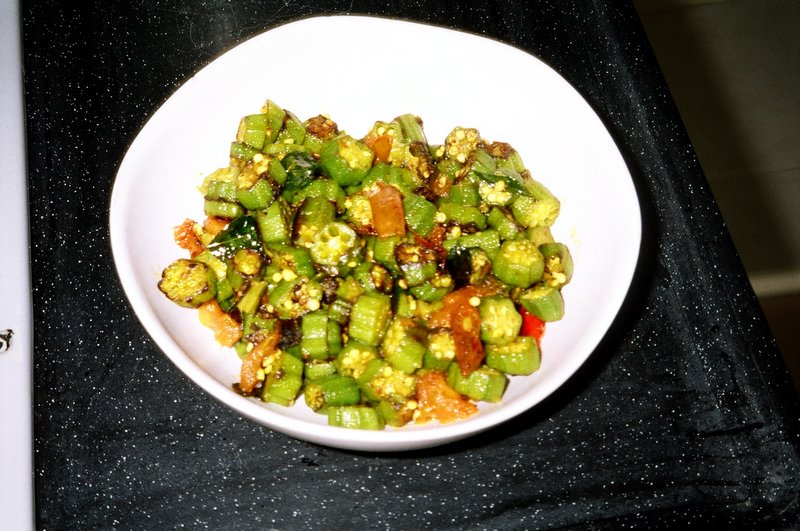
Okra and tomato stir-fry (bhindi baaji)


This is a simple vegetable dish that can be made in about 15 minutes. It tastes particularly good with white rice, some nice dhal and a few crisply fried aaplams.


The Recipe

300 gms okra washed and patted dry on kitchen towel then diced
2 medium-sized tomatoes cubed
2-3 green or red chillies
1 teaspoon tumeric powder
1 teaspoon black mustard seeds
some curry leaves
oil for frying
salt to taste


Heat oil in a wok, when smoking hot add the mustard seeds and curry leaves. After a couple of seconds (just as the mustard seeds start to splutter) add the okra and fry well. Add tumeric powder, salt and tomatoes and stir-fry briskly. Lowe heat and cover and let the vegetable cook for a while. It shouldn't take more than 10 minutes or so.

OPTIONS: make similar stir-fries using other cubed vegetables like red pumpkin, zucchini, sweet potatoes, aubergines, beans in any combination you like with tomatoes, and sometimes try adding a few fenugreek seeds (methi) in the smoking hot oil along with the mustard and curry leaves. Do not let the fenugreek seeds burn.

Thursday, July 06, 2006

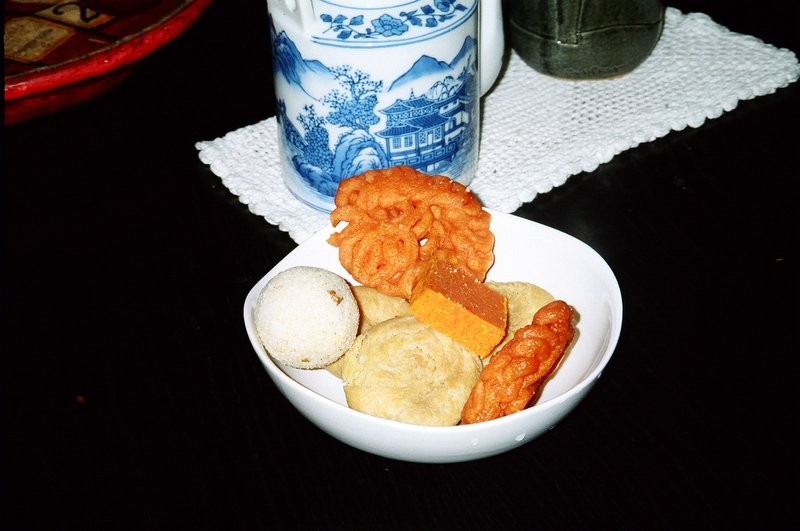
Taste of heaven!


This is a picture of some delicious South Indian sweets that I bought from Little India. The dish has jhangris, rawa ladoo, coconut burfee and a balushahi in it. All the sweets are made from pure ghee, milk, sugar and flavorings like coconut and saffron.

Thursday, June 22, 2006

Koli Curry: Flavorful chicken curry from Coorg


Coorg is a beautiful region located in the Western Ghats in the southern Indian state of Karnataka. The people of Coorg -- Kodavas -- a brave, extremely good-looking race are fun loving and carry with them the beauty of their region. The region of Coorg, rich in coffee and spice plantations also has the most amazing cuisine. The Koli (chicken) curry and 'nool puttu' or rice noodles are only two of the best known dishes from this really picturesque Indian hill station. The recipe below is for Koli curry, it is really easy to make and tastes so good that it deserves pride of place in any spice-lover's favorite dinner party menu.


The Recipe


1 kg chicken cut and cleaned
1 large onion chopped fine
juice of 1 lemon
2 cups warm water
1/2 cup grated coconut
1 teaspoon tumeric powder
2 teaspoons chillie powder
salt to taste
oil for frying

In a mortar and pestle (or blender) make a paste of the following:

1 tablespoon whole coriander seeds
1 piece of cinnamon
4 cloves
1 inch piece ginger
5 cloves of garlic
1/2 teaspoon poppy seeds (posto)
1/2 teaspoon cumin seeds
1 bunch fresh coriander leaves chopped coarse (wash roots and stems well and include it in the paste)

Separately make a thick paste of the fresh grated coconut


In a large well heated pan add some oil and when it is smoking hot, add the onions and fry till translucent; add salt and the ground spice paste. Fry very well till a delicious fragrance is released, then add the chicken pieces and continue to fry well till the chicken is well coated with the spice paste. Pour in the two cups of warm water, bring to a boil, then cover reduce heat and simmer till chicken is cooked through.
Stir in the coconut paste gently, add the lemon juice and simmer about 2-3 minutes. Then remove from heat and serve hot with steamed white rice.

Wednesday, June 21, 2006

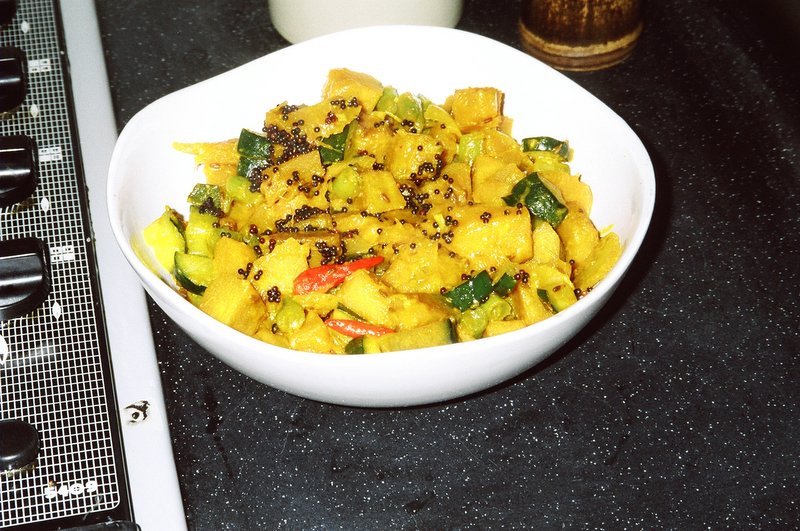
Pumpkin with yogurt and black mustard seeds


Thinking up vegetable dishes for everyday Indian meals can be a bit of a challenge. The other night I sort of created this surprisingly delicious pumpkin (called lal kumro or red pumpkin in Bengali) dish that takes little time and even less effort. Serve it hot with rice or rotis or even use it as an unusual sandwich filling.


The Recipe


200 gm pumpkin cubed
a handful of French beans cut into smallish pieces
1 Japanese cucumber cubed
1 teaspoon cumin seeds
2-3 slit green or red fresh chillies
1 teaspoon tumeric powder
1 tablespoon yogurt
1 teaspoon black mustard seeds
salt to taste
oil for frying


Heat the oil, add the black mustard seeds and when they start to splutter add the cubed vegetables and stir-fry quickly. Add salt, tumeric and chillies and keep frying for a few minutes. Reduce heat and cover and let the vegetables sort of cook in their own steam.
When the vegetables are nearly cooked (around 10 minutes) stir in the tablespoon of yogurt. Mix very well and remove from heat. Serve hot.

Friday, June 16, 2006

Fish curry in a piquant mustard gravy


This is an adaptation of a treasured Bengali recipe. The reason I say 'adaptation' is that I've added a few cubed vegetables to the curry, while in Bengal it is generally prepared with fish and potatoes only. Cooking fish with a pungent, piquant freshly ground mustard paste ('shorshe baata') is one of the commonest (and most delicious) fish preparations throughout Bengal. I normally use a stone mortar and pestle, if you don't have one a regular blender works just fine.


The Recipe

Make a paste using a mortar and pestle (or blender) of the following with a bit of water:

a little more than 1/4 cup black mustard seeds
4 fresh green or red chillies


3-4 medium sized fish steaks (milk fish, cod, carp) rubbed with salt and tumeric powder and kept aside
1 medium sized eggplant cubed
3-4 okra cubed
1 potato cubed (skin on, well washed)
2 tomatoes quartered
1 teaspoon sugar
1 teaspoon tumeric powder
salt to taste
oil for frying


Fry the tumeric coated fish in hot oil a few minutes each side, till crisp and golden. Keep aside.
In the same oil, put the mustard-chillie paste and fry a few seconds, add a teaspoon or two of warm water, the tomatoes and sugar and fry well for a couple of minutes on medium heat. Add the cubed vegetables and keep frying (add a little more water if needed, just to keep the mixture a little thick). Add the fish, fry carefully making sure the pieces do not break. When the fish and vegetables are well coated with mustard, add salt and about two cups warm water. Reduce heat and simmer for about 12 minutes or till the vegetables are cooked.
Serve hot with white rice.

Tuesday, June 13, 2006

Fish curry with pumpkin and sweet potatoes


Typically Indian curries do not mix vegetables and meat or fish (that is of course if we don't count potatoes as vegetables). I'm not sure why this is so especially as in most east and south east Asian countries one-pot meals are quite common. In india we do find the odd curries of Bengal where fish is cooked with cauliflower florets or big cubes of 'potol', but like I said around the country as a whole, usually the meat/ fish etc is cooked by itself and the vegetable dishes are served separately.

Having lived in east Asia for a while now, I've got quite used to mixing up my meat/ fish with a selection of vegetables -- in essence creating a convenient one-pot meal. I've also got used to experimenting with spices and curry pastes, retaining a basic Indian flavor but freely borrowing from Asian techniques and ingredients that seem to me to go well with Indian spice mixes. The recipe below is the result of this sort of experimentation. In this dish I've used small chopped bits of fresh coconut -- it adds a delicious crunchy texture to the dish. Fresh coconuts are not always easily available, a good substitute would be a handful of lightly fried unsalted cashew nuts.


The Recipe


4 fish steaks (use a nice fish that absorbs flavors well like cat fish or carp)
200 gm sweet pumpkin cubed
1 large sweet potato peeled and cubed
2 tomatoes (medium sized) chopped fine
handful of curry leaves
2 tablespoons fresh coconut chopped into little cubes (or the cashew nut substitute)
1 teaspoon tumeric powder
1 teaspoon coriander powder
1 teaspoon sugar
salt to taste
oil for frying

Make a paste of the following using a mortar and pestle or blender:
2 shallots
1 inch piece ginger
3-4 fresh green or red chillies
1 teaspoon whole white pepper


Wash and pat dry the fish on kitchen towels. Rub some salt and tumeric powder on the fish and keep aside for about 10 minutes. Heat some oil in a pan and when smoking, put in the fish and fry about 2 minutes on each side till fish turns nice and golden. Keep the fried fish aside.
Add some more oil to the pan, put in the spice paste and fry well for a couple of minutes; add the teaspoon of tumeric and coriander powder, the tomatoes, salt and sugar. Fry some more and then add the vegetables and curry leaves and about a tablespoon of warm water. Fry very well 6-8 minutes till the vegetables are well coated with the paste.
Add about two cups of warm water bring to a boil and then lower heat and simmer another 6-8 minutes. Add the fried fish and coconut pieces and simmer again for about 5 minutes. Remove from heat and serve hot with steamed white rice.

Saturday, June 10, 2006

Poha: Savory rice flakes


This picture shows black mustard seeds (rye)

::::::::::::::::::::::::::::::


Snack food in India probably deserves an encyclopedia of its own. An amazing variety of fritters (telebhajas, pakoras or bhajis) is prepared from all kinds of vegetables, even vegetable peels -- in Bengal, fish, shrimp; small dosas called utthapams; varities of dried rice and rice flakes known as poha and muri are lightly spiced and served with hot tea; bhels and sevs -- dried fried dhals are another snack basic combined with all manner of nimkis and puris to make chaats; and then there is the paani puri or puchka of Bengal; vadas of the South and vada-pavs of Bombay to list just a few of India's commonly available snacks. In fact even the humblest tea stall in India will have a few glass jars of flaky pastry biscuit, or the hard nankhatais or even just simple rusks to accompany the tea. In the streets of Calcutta, evening tea stalls often sell hard boiled eggs or omelettes as accompaniments to the little bhars of cha.

I remember stopping at a picturesque tea stall on the winding road up from Siliguri to Gangtok with my husband, the little wooden shack that served as a tea stall sold hot sweet tea and crisp homemade savory biscuits studded with onion seeds.

Poha or rice flakes, are actually rice grains that have been parboiled, flattened by heavy rollers and then dried (also known as 'habalapethi' in Sri Lanka). Poha is eaten as a between meals filler in both north and south India (though more commonly in the north) and is easily available at all Indian groceries. My recipe uses typical southern Indian ingredients and takes a few minutes to prepare.


The Recipe

2 cups poha washed and drained in a colander
1 teaspoon black mustard seeds
a few curry leaves
1/2 a small white onion finely diced
a handful of chopped coriander leaves
1 small tomato chopped fine
1-2 green chillies diced
oil for frying
salt to taste

Heat the oil till smoking, add the mustard seeds and when they start to crackle, the onion and tomato. Fry till onion is soft and transclucent and tomatoes pulpy, add curry leaves and chillies. Mix in the poha. Fry well for a minutes, add salt to taste and sprinkle with chopped coriander leaves before serving.
Serve hot with masala cha

Friday, June 09, 2006

Mangsher Korma: Spicy lamb

This is another dish from Bengal. Growing up, this delicious lamb (or mutton as it is made with in Bengal) would be prepared quite regularly and served with aloo bhaja, white rice and phulkopir torkari (cauliflower vegetable). For desert we'd have fresh sweet plums and mishti doi, a bengali yoghurt preparation where natural curds are thickened and sweetened with jaggery.


The Recipe

1 kg lamb cubed
3 white onions grated or diced very fine
5-6 big cloves of garlic grated or chopped very fine
cinnamon powder 2 teaspoons
chilli powder 2-3 teaspoons
1 teaspoon fresh grated ginger
1 cup yoghurt
3-4 tablespoons ghee
salt to taste
sugar to taste (about 1 teaspoon)


Marinate the lamb in the yogurt for about 1 and a half to 2 hours.
Heat the ghee in a heavy-bottomed casserole dish. Add the sugar, cinnamon powder, chilli powder, onion. Fry this mixture well until it releases a delicious fragrance and the oil separates from the paste. Frying the mixture till it is well cooked will give the dish its rich taste.
Add the lamb pieces, fry well and add salt to taste. Add a little warm water (quarter cup, as the meat will also release juices as it cooks) cover the dish and simmer till meat is well cooked about 45-50 mins. If you prefer, you can pressure cook the lamb with a little more water, at least a cup to a cup and a half. In which case, keep it under pressure (on a low gas) for about 30 mins. If you haven't used the pressure cooking method, check occasionally to see if the water is sufficient.
Serve hot with white rice